Download Center||
Materials

What Is Synthetic Rattan? How It Is Made and How It Compares to Natural Rattan

September 14, 20264 Minutes
What Is Synthetic Rattan? How It Is Made and How It Compares to Natural Rattan
What Is Synthetic Rattan?

Synthetic rattan is a manufactured alternative to natural rattan, which comes from climbing palms that grow primarily in tropical regions. The synthetic material is designed to imitate the woven character of natural cane while reducing some of the problems associated with prolonged exposure to rain, humidity, and direct sunlight.

Most higher-quality synthetic rattan furniture uses high-density polyethylene, or HDPE. HDPE is flexible enough for weaving while remaining resistant to moisture, cracking, and changing outdoor temperatures. PVC and other plastics are also used, particularly in lower-cost furniture, but HDPE is generally preferred for furniture intended for regular outdoor use.

Synthetic rattan is therefore not simply an artificial version of natural rattan. It is a material developed for a different performance requirement, particularly where weather resistance and dimensional consistency are more important than preserving the characteristics of a natural fiber.

How Synthetic Rattan Is Made

Synthetic rattan begins as polymer resin rather than a harvested cane. Manufacturers process the resin into long flexible fibers that can be woven around furniture frames in much the same way as natural rattan.

The final performance of the material depends on more than the polymer itself. Resin quality, additives, extrusion consistency, fiber thickness, and the quality of the supporting frame all influence how the finished furniture performs over time.

Resin Compounding

Production normally begins with HDPE resin pellets. These pellets are mixed with pigments, UV stabilizers, heat stabilizers, and other additives before being processed into usable fibers.

UV stabilizers are particularly important for outdoor furniture because they help slow discoloration and degradation caused by prolonged sunlight exposure. Pigments are incorporated directly into the resin mixture, allowing manufacturers to create consistent colors throughout the synthetic fiber.

The quality of this stage can have a significant effect on long-term durability. Two pieces of synthetic rattan furniture may look similar when new, but differences in resin formulation and UV protection can lead to very different performance after several years outdoors.

Extrusion

Once the resin mixture is prepared, it is heated until it becomes workable and pushed through specially shaped extrusion dies. This produces long, continuous strands of synthetic rattan.

Manufacturers can create flat, half-round, or fully round fibers, depending on the desired appearance and furniture style. Surface textures and color variations can also be introduced during production to make the material resemble natural cane more closely.

The extrusion process gives synthetic rattan one of its main manufacturing advantages. Long strands can be produced with consistent thickness and dimensions, reducing the number of joints required during weaving and creating a more uniform finished surface.

Weaving and Frame Assembly

The finished synthetic strands are woven around a structural furniture frame. Powder-coated aluminum is commonly used because it is relatively lightweight, corrosion-resistant, and suitable for outdoor environments.

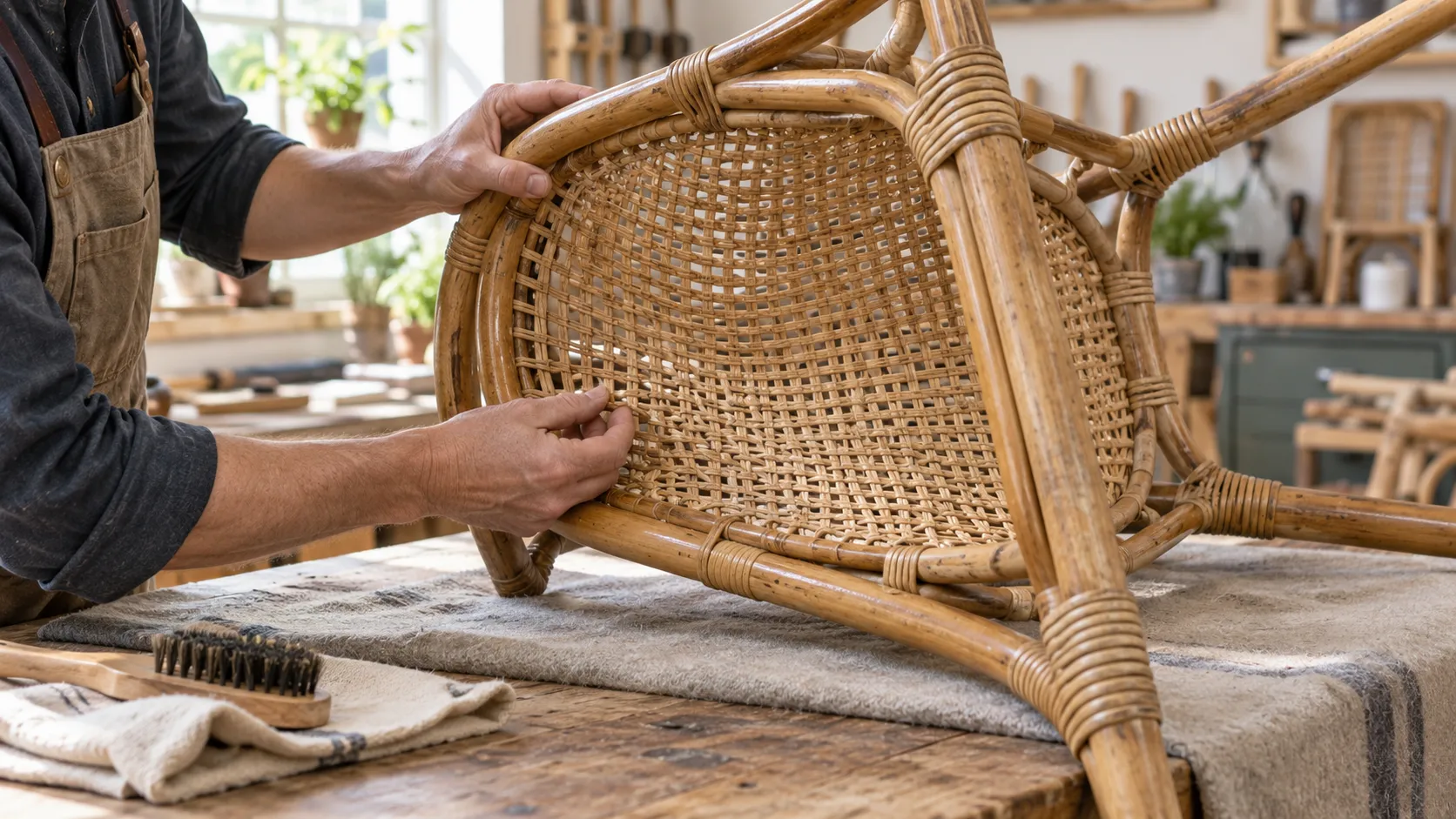
The weaving process may still involve considerable manual work. Skilled workers guide the synthetic strands around the frame, maintain tension, create the selected pattern, and finish corners and edges carefully so the surface remains consistent.

In this type of furniture, the frame provides the primary structural support while the synthetic rattan forms the visible woven surface. The durability of the finished product therefore depends on both components, not only on the quality of the synthetic fiber.

How Synthetic Rattan Compares to Natural Rattan

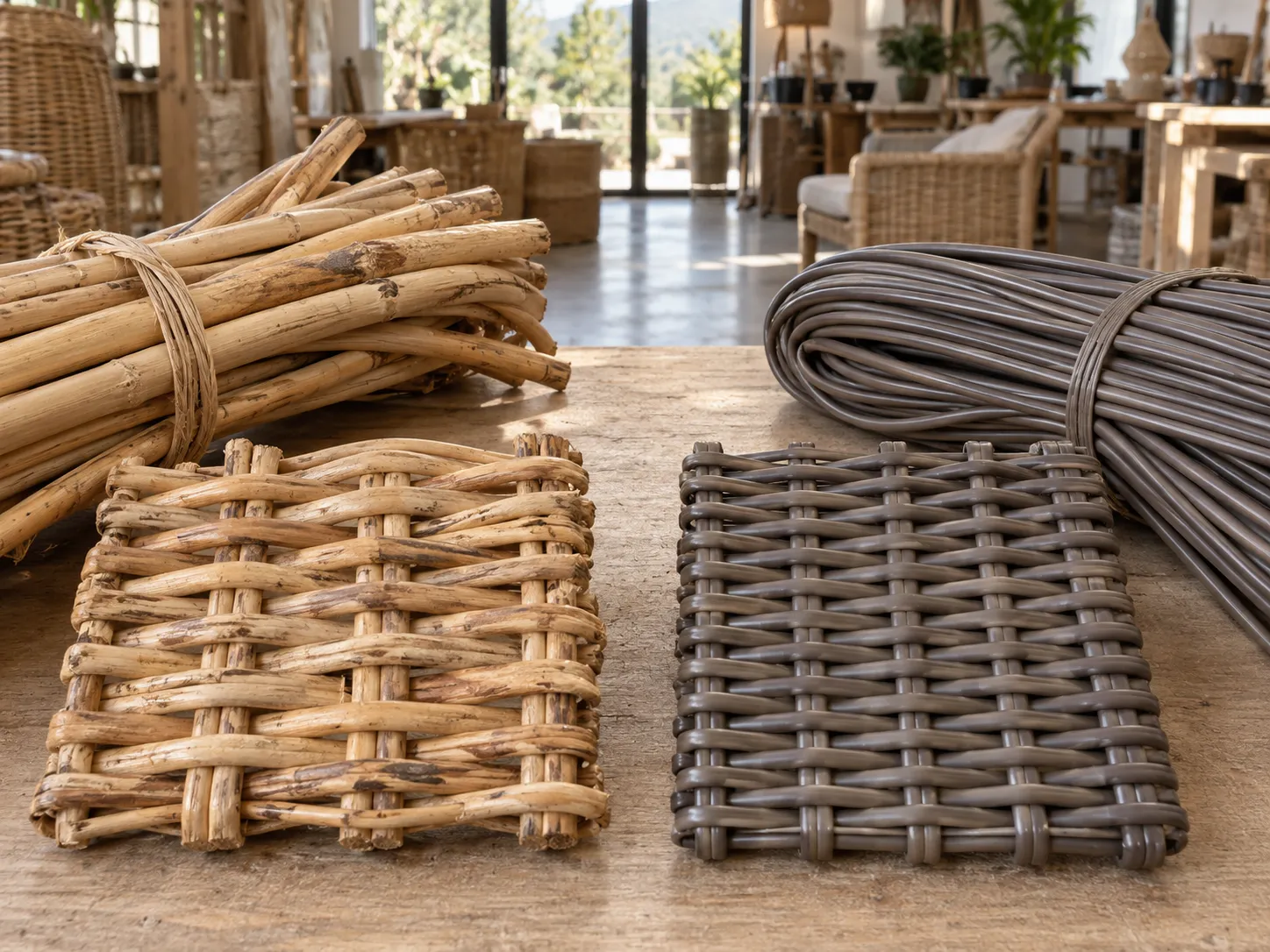
The biggest difference between synthetic and natural rattan is the environment each material is designed to handle. Synthetic rattan performs particularly well where furniture is repeatedly exposed to moisture, sunlight, and changing temperatures.

Natural rattan requires more protection from those conditions. Continuous exposure to rain or high humidity can cause the fibers to absorb moisture, while prolonged sunlight can dry the material and gradually weaken or discolor the surface. For that reason, natural rattan is generally more suitable for indoor and sheltered environments.

The two materials also look and feel different. Synthetic fibers can be produced with consistent color, dimensions, and surface texture, while natural rattan contains variations in grain, tone, nodes, and fiber structure. Those irregularities are part of what gives natural rattan its distinctive material character.

Where the Trade-Offs Between Synthetic and Natural Rattan Sit

Synthetic rattan should not be treated as an upgraded version of natural rattan. Each material performs better under different conditions and responds to different design priorities.

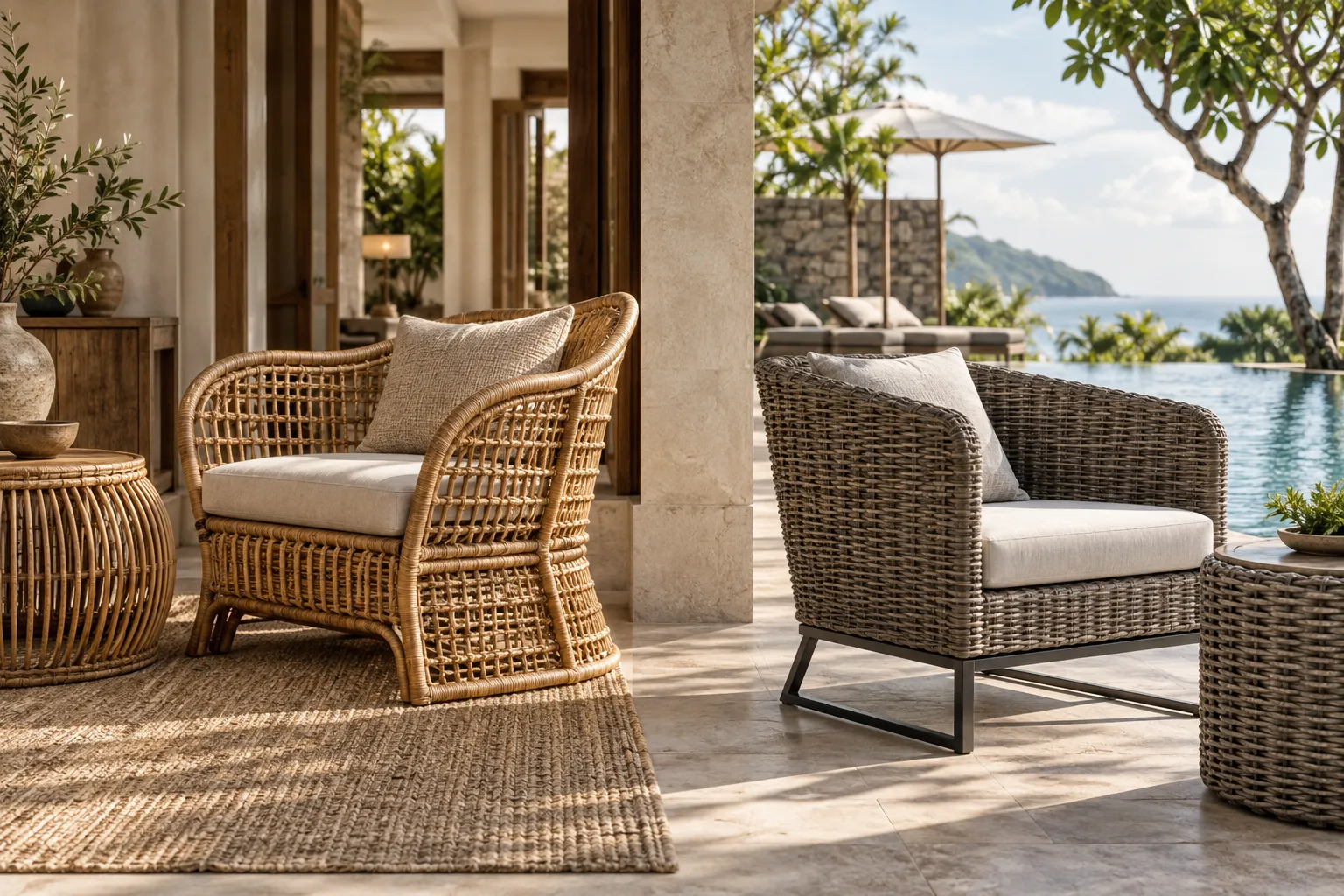
Natural rattan works particularly well in interiors, covered verandas, sunrooms, lounges, and hospitality spaces where the material is protected from continuous weather exposure. Its natural variation, warm tones, and visible fiber structure give each finished piece a character that manufactured fibers cannot completely reproduce.

Synthetic rattan becomes more practical when furniture must remain outdoors with limited protection. Resorts, restaurants, pool areas, gardens, and commercial terraces often prioritize weather resistance, ease of cleaning, and consistent appearance, making synthetic fibers more suitable for those environments.

Sustainability Considerations

Natural rattan has an important environmental advantage because it is a renewable and biodegradable biological material. When responsibly harvested and managed, rattan can provide raw material without requiring the same production process as petroleum-based synthetic fibers.

Synthetic rattan, particularly HDPE, is derived from petrochemical feedstocks and does not biodegrade naturally. However, its environmental performance also depends on how long the furniture remains in use. A durable outdoor chair that lasts for many years may create less replacement demand than a material that deteriorates quickly in the same environment.

HDPE can also be recycled where suitable collection and recycling facilities are available. For that reason, the sustainability comparison should consider harvesting, manufacturing, durability, transportation, maintenance, recyclability, and eventual disposal rather than judging the materials solely by whether they are natural or synthetic.

Which Type of Rattan Should You Choose?

The intended environment should be the first consideration. For furniture that will remain exposed to rain, humidity, direct sunlight, or changing outdoor temperatures, HDPE synthetic rattan is generally the more practical material.

Buyers choosing synthetic rattan should confirm what polymer is being used rather than relying only on the term "rattan." It is also useful to ask whether UV stabilizers are incorporated into the fiber and what material is used for the supporting furniture frame.

For indoor furniture or pieces placed in properly covered areas, natural rattan offers a different advantage. Its genuine texture, tone variation, light weight, and handcrafted character make it particularly suitable when the visual qualities of a natural material are more important than continuous weather resistance.

Conclusion

Synthetic and natural rattan serve different purposes: synthetic rattan is better suited to outdoor environments where moisture resistance, durability, and consistency matter most, while natural rattan remains the stronger choice for indoor and sheltered spaces where authentic texture, craftsmanship, and renewable material character are the priority. The better option ultimately depends on where the furniture will be used and which qualities matter most in that setting.


Stay Inspired

Subcribe to our insight newsletter and be the first to receive the latest article and news updates form Tradeasia

Need help or product quote?👋 Chat with Assistant!