Many furniture buyers use the words rattan and wicker as if they mean the same thing. In everyday conversation, this is common. However, in B2B furniture sourcing, the difference matters. A buyer who does not understand the distinction may order the wrong material, misunderstand product specifications, compare prices incorrectly, or face quality issues during bulk production.
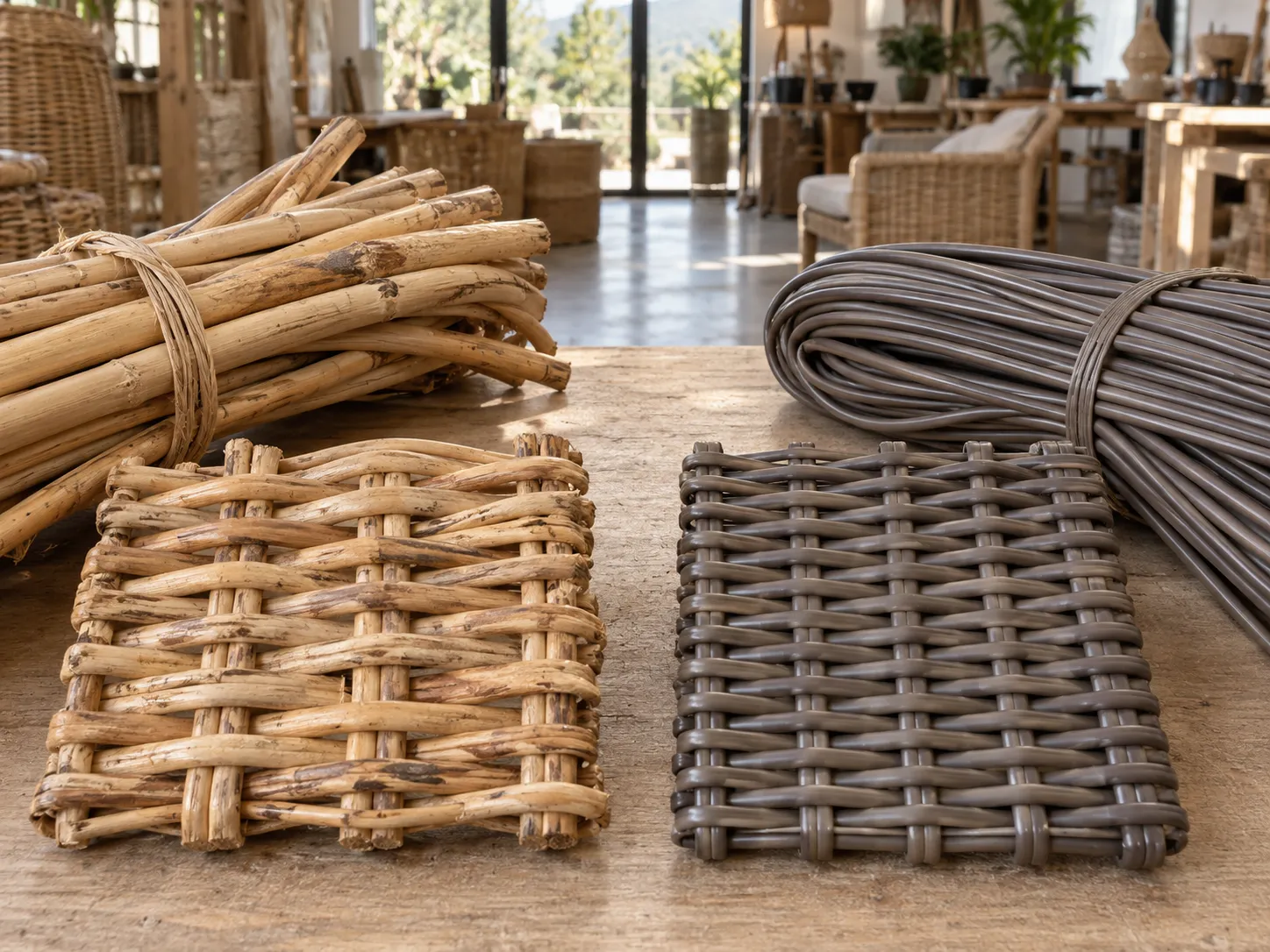
The simplest explanation is this: rattan is a material, while wicker is a weaving technique. A furniture product can be made from natural rattan and designed with a wicker weave, but not every wicker product is made from rattan. Wicker can also be made from bamboo, willow, seagrass, synthetic resin, plastic, or other flexible materials.
For B2B buyers, importers, wholesalers, furniture retailers, hospitality procurement teams, interior project buyers, and sourcing managers, this distinction is important because it affects product durability, finishing, indoor or outdoor use, pricing, packaging, and supplier evaluation. This guide explains the difference between rattan and wicker in a practical way so buyers can make better sourcing decisions.