Download Center||
Rattan Guide

How to Spot High-Quality Rattan Furniture During Wholesale Procurement

September 16, 20263 Minutes
How to Spot High-Quality Rattan Furniture During Wholesale Procurement
Introduction

Wholesale rattan furniture can look impressive in a catalog or showroom, but appearance alone does not reveal how well it will perform after months of commercial use.

For hotels, resorts, restaurants, distributors, and other volume buyers, frame construction, synthetic rattan quality, weaving, hardware, and packaging can directly affect product lifespan. These areas should therefore be checked before approving a large purchase order.

Inspect the Frame First

Commercial outdoor rattan furniture commonly uses powder-coated aluminum, which provides good corrosion resistance while keeping the furniture relatively lightweight. Depending on the product design and load requirements, aluminum frame tubes may use wall thicknesses of approximately 1.2–1.5 mm.

Check whether the furniture feels rigid when moderate pressure is applied. Excessive movement may indicate a weak frame or poorly reinforced joints.

Welds also deserve close inspection, particularly around chair legs, seat frames, armrests, backrests, and cross supports. Look for consistent welds without obvious cracks, incomplete connections, or sharp unfinished residue.

Confirm the Synthetic Rattan Material

For outdoor furniture, buyers should confirm what the woven fiber is actually made from.

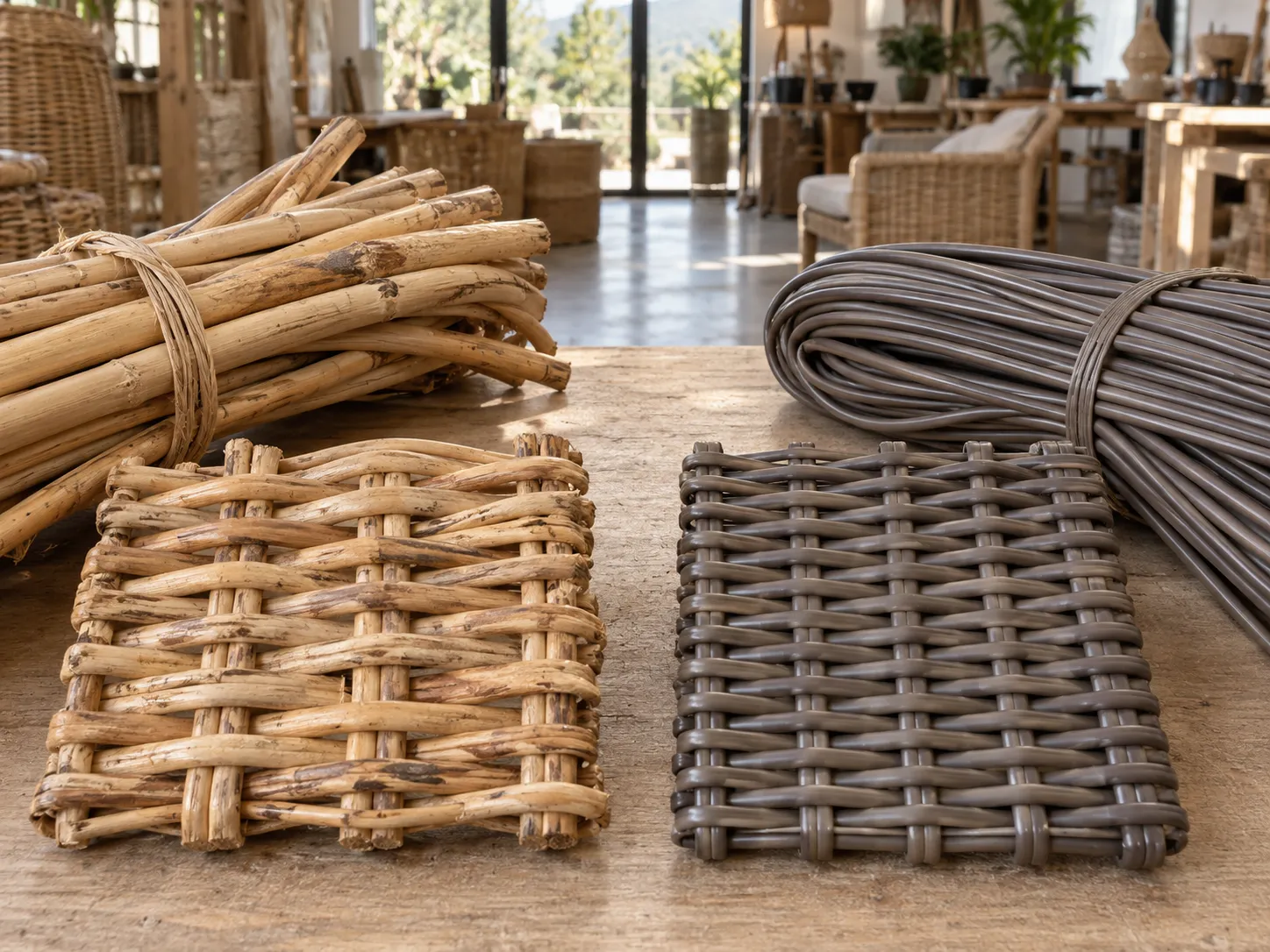
High-quality synthetic rattan is commonly produced from high-density polyethylene (HDPE). Virgin HDPE is often preferred for commercial outdoor furniture because of its flexibility, weather resistance, and consistency.

Lower-cost alternatives may use recycled polymers, PVC, polyurethane, or mixed formulations. These differences can influence how quickly the material becomes brittle, faded, or cracked under sunlight and changing temperatures.

Ask the supplier to confirm:

  • Resin composition

  • Whether UV stabilizers are included

  • Available UV or weather-resistance testing

  • How the fiber is colored

Higher-quality synthetic fibers typically have pigment incorporated into the resin rather than relying entirely on a surface coating.

Check Weave Tension and Support

Consistent weaving is both a visual and structural quality indicator.

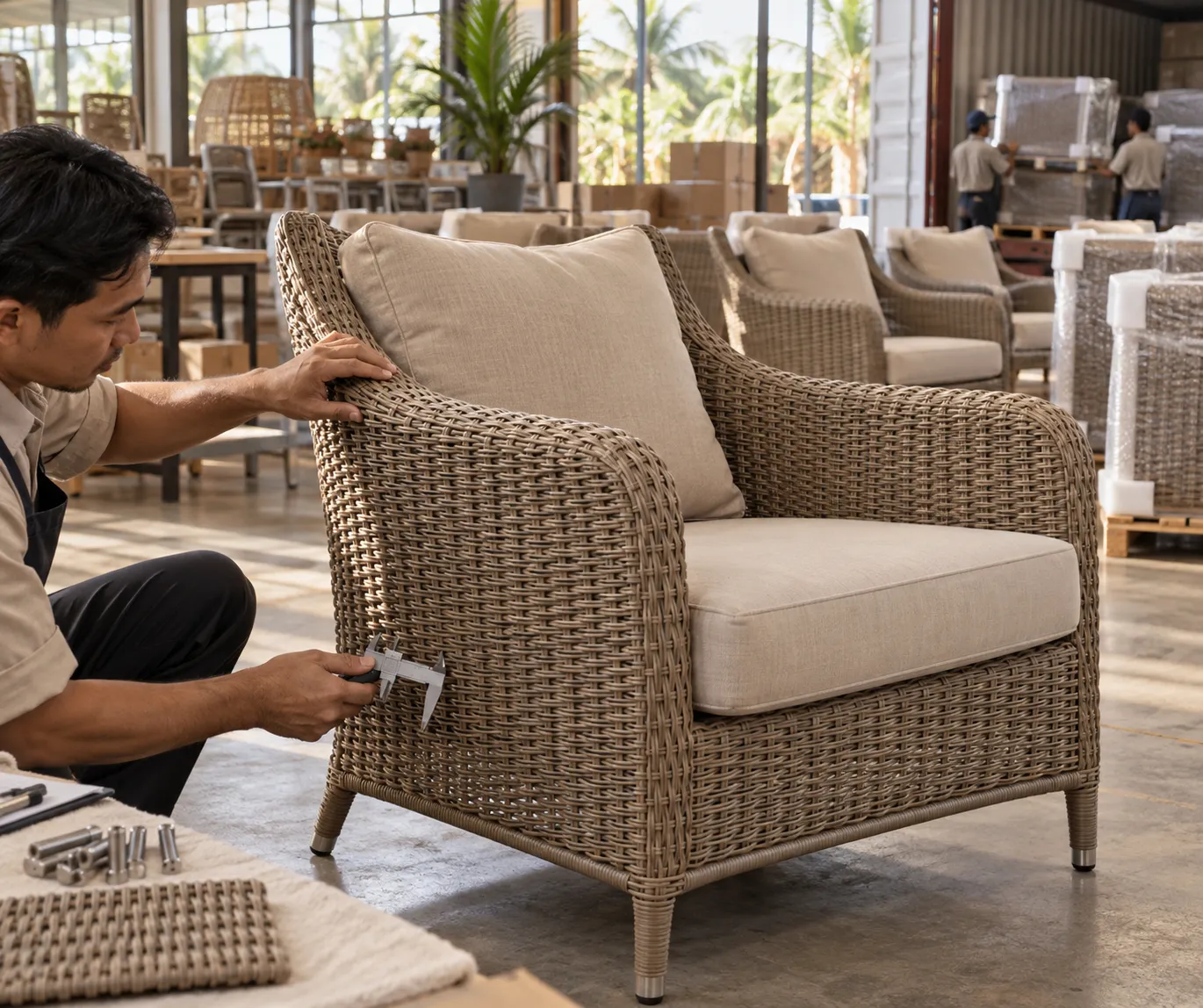
Look for even spacing across seats, backrests, and side panels. Loose strands, irregular gaps, fraying, exposed fasteners, or noticeable differences in tension can indicate poor workmanship.

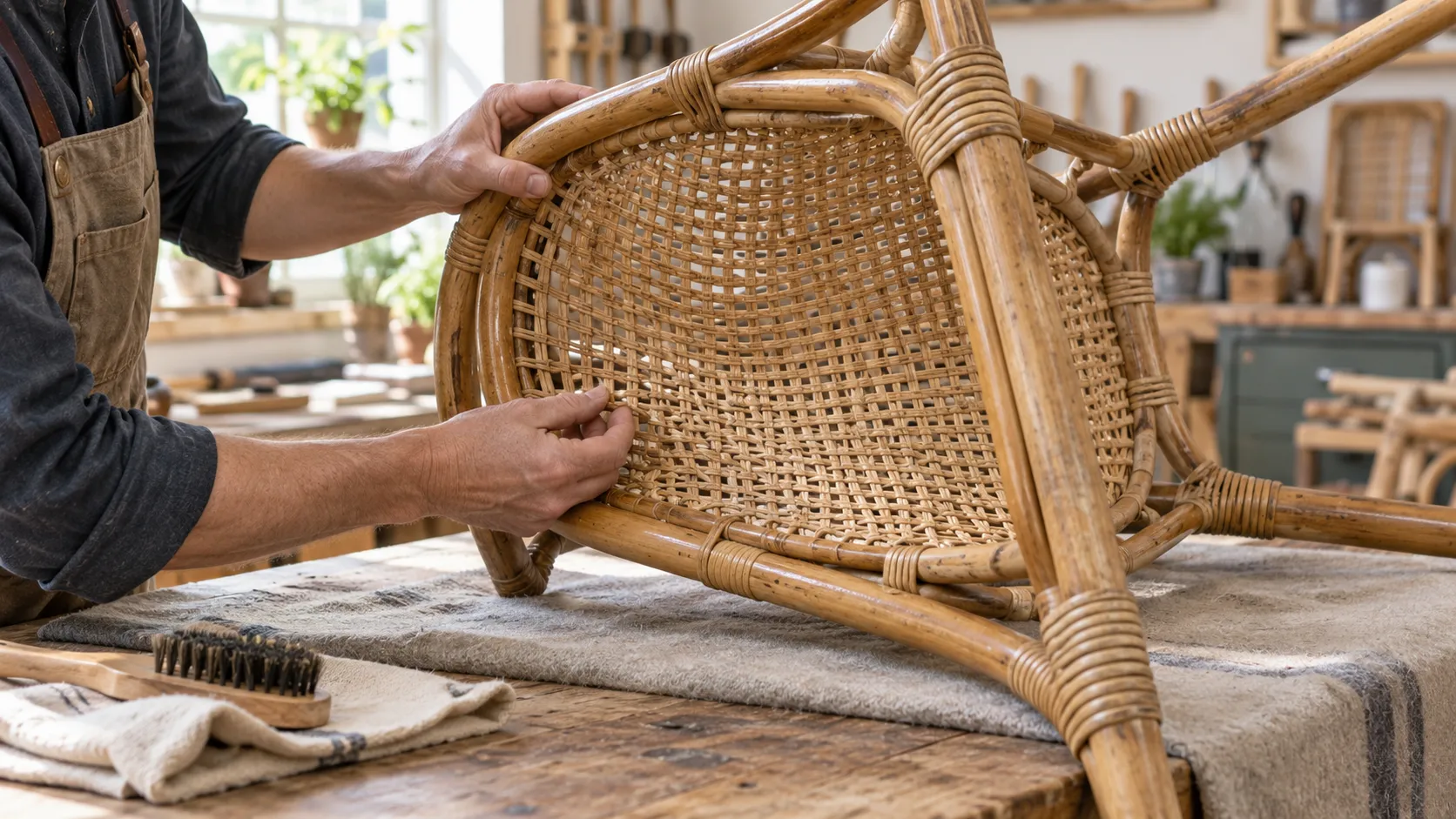
Press gently against the seat and backrest. The weave should remain firm without excessive strand movement.

Also inspect underneath the furniture. Commercial pieces may use aluminum crossbars, webbing, or additional reinforcement beneath the seat so the visible weave does not carry the full load by itself.

Examine Hardware and Cushions

Outdoor hardware should be selected for the environment where the furniture will be installed.

304 stainless steel is commonly suitable for general outdoor applications, while 316 stainless steel offers better resistance in coastal, poolside, or high-salt environments.

For upholstered furniture, check more than the cushion appearance. Foam density, resilience, thickness, fabric durability, stitching, and seam quality all matter. Around 28 kg/m³ or higher may be used as a reference for firmer furniture applications, although density alone does not determine cushion quality.

Request Documentation and Approve a Golden Sample

Supplier claims should be supported by relevant documentation when possible.

Testing may cover material composition, UV resistance, restricted substances, mechanical strength, or export-market requirements. SGS testing, ISO certifications, and REACH-related documentation may all be relevant, but each proves something different.

An ISO-certified factory, for example, does not automatically mean a specific chair has passed structural or UV testing.

Before mass production, approve a golden sample covering:

  • Dimensions and construction

  • Weave quality

  • Finish and color

  • Hardware

  • Cushions and stitching

  • Overall workmanship

The final production batch should then be inspected against this approved reference.

Do Not Ignore Packaging

Good furniture can still arrive damaged if export packaging is weak.

Rattan furniture is vulnerable to scratches, crushed corners, bent legs, abrasion, and pressure during container loading. Depending on the product, suitable protection can include foam wrapping, corner guards, protective bags, separators, and export-grade cartons.

For heavier furniture, five-ply corrugated cartons may provide additional compression resistance.

Container loading should also be reviewed because poor stacking can damage furniture even when individual pieces are properly wrapped.

Conclusion

High-quality rattan furniture procurement depends on more than selecting an attractive design. Frame strength, resin composition, weave consistency, hardware, supporting documentation, golden-sample approval, and export packaging all contribute to how reliably the furniture performs after delivery and installation.

For wholesale and commercial buyers, addressing these details before mass production can help reduce premature product failure, replacement costs, warranty claims, and project disruption.

For businesses sourcing rattan furniture from Indonesia, Rattan Tradeasia supports B2B buyers with rattan sourcing solutions for hospitality projects, distributors, importers, retailers, and other commercial requirements. From product selection and quotation requests to specifications and sourcing coordination, Rattan Tradeasia can help businesses source rattan products that match their project and procurement needs.

Explore Rattan Tradeasia's product collection or submit your sourcing requirements to find the right rattan solution for your business.


Stay Inspired

Subcribe to our insight newsletter and be the first to receive the latest article and news updates form Tradeasia

Need help or product quote?👋 Chat with Assistant!